
Why Addiction Memoirs Are Crucial for Understanding Recovery
Addiction narratives are very powerful since they reveal the situation when a person completely loses control and afterward somehow finds his way back. They are not composed with a view to impress; rather, they are the strongest possible expressions of human suffering and tenacity. One can easily sense the fear, the shame, and the slightest pleasure that accompany an individual’s decision to stop running at last. Some novels do not just inform you about the healing process, they immerse you in it. The best addiction memoirs are like that. They extract judgment from the scene and allow empathy to take its place, thus reiterating the point that recovery is not about being perfect. It is rather about outliving the dark moments until you learn the skill of living a new.
1. A Million Little Pieces by James Frey: A Classic Addiction and Recovery Memoir
A Million Little Pieces, written by James Frey, is a controversial book that still draws arguments and justifiably so. It is a harsh, disordered, and fascinating story. Frey talks about addiction to drugs and alcohol in a very hard way with no filters, taking the readers along with him through the sweat, fury, and disorientation of being cured. The readers can almost sense the pain in his phrases. The question whether every single detail occurred the way it is described does not have such a big importance as the truth behind it, the terrible struggle to live when nothing seems possible.
2. The B-Train: An American Loser : A Raw Memoir of Addiction By Bo Joseph
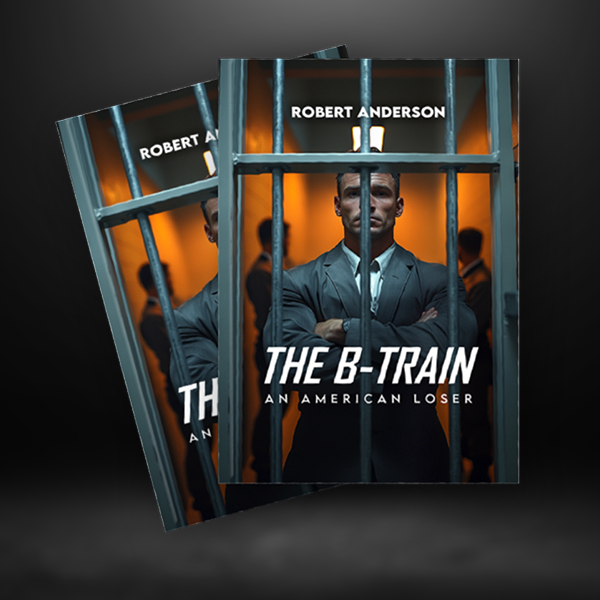
Bo Joseph’s The B-Train: An American Loser reads like a confession and a comeback rolled into one. Bo Joseph spends years chasing money, validation, and the thrill of winning, only to lose himself every time. You can almost see him at a poker table, hands trembling, convinced the next bet will fix everything. It never does. His story isn’t polished, it’s messy, violent, and alive. That’s what gives it weight. Among the best addiction memoirs, this one refuses to tidy up the damage. When he finally lets go of “The B-Train” persona and faces the man underneath, it’s not a miracle. It’s something rarer: hard-earned peace.
3. My Booky Wook: A Memoir of Sex, Drugs, and Stand-Up by Russell Brand
Russell Brand is not the type of person who closes up his tale. The author presents every bit of his life, the drugs, the sex, the isolation which he concealed under a mask of being funny. The reader could sense that fame just brought chaos to the surface. Underneath the turmoil, there is a brain that wants nothing more than peace and a little bit of understanding. That’s the reason why his book has such a big impact. It is a mixture of messiness, humor, pain, and truthfulness all at once. It is one of those very rare addiction narratives which, among others, does not ask for compassion. At the same time, it tells you that the process of liberation starts when you decide to quit deceiving yourself.
4. High Achiever: The Incredible True Story of One Addict’s Double Life by Lisa Smith
Tiffany Jenkins spins a tale of her own life like a person who has shed the mask finally. At the outset, her life seemed perfect, cheerleader, soon-to-be wife of a policeman, and smiling in every picture. Gradually, however, came the medication, deceit, and the gradual destruction that led to prison. The durability of your interest in the story is not due to the fall itself, but rather through her dominance or management of the situation afterward. She is intelligent, amusing, and brutally open about the price of keeping up the act of everything being alright. Her memoir is among the best and it feels the most vivid.
5. The Unexpected Joy of Being Sober by Catherine Gray
Catherine Gray’s The Unexpected Joy of Being Sober isn’t a story about loss, it’s about waking up. Literally. One morning she realized she couldn’t remember half of last night and didn’t want that to be her life anymore. From there, she starts rebuilding, one quiet evening at a time. Her writing feels sharp, funny, and brutally self-aware. She doesn’t exaggerate the drama; she shows what happens when the noise finally fades. That honesty makes it one of the most powerful true addiction memoirs out there. For anyone trying to quit or simply understand, it’s proof that sobriety isn’t an ending. It’s a beginning that feels startlingly alive.
6. Surrender by Bono : A Rock Star’s Struggle with Addiction and Finding Purpose
In his memoir, the front-man of Bono presents a mosaic of songs, stories and survival as he builds a bridge from fame toward insight. Born in Dublin and thrust into the spotlight, he chronicles his early life, addiction-fueled excesses and a long journey toward meaning. Using forty chapters inspired by his own songs, the narrative pulses with music, loss and renewal. He writes about hitting rock bottom, wrestling with guilt and finding a purpose beyond hits and applause. Among the top addiction recovery memoirs, this book stands out for its focus not just on escape but on the decision to commit to something greater than the self.
7. Clapton: The Autobiography by Eric Clapton
In this no-holds-barred autobiography, Eric Clapton shows the world how the spotlight frequently obscures the distinction between pain and joy. He exposes his artistic agony by narrating his gunslinging duel with drugs, alcohol and identity, and declares that his survival lies in facing an endless and unrelenting struggle with addiction, grief, and identity. The battle at the front is not won by despair; rather, it is won through sober living, building trust, and hard work. Clapton’s narration is so personal that it cannot be anything but nonstop in the collection of addiction memoirs since it demonstrates the slow process of redemption with endurance, reflection and acceptance as the main ingredients.
8. Me: Elton John Official Autobiography by Elton John & Taron Egerton
Elton John is never the one to hold back any information regarding his life and the things he went through. He tells about his childhood in perishing society in the UK, making people realize that his life was colorful even when the world was expecting him to be gray. He was known almost instantly, and so too chaos, with all the parties, pills, and the loneliness which was concealed under the glitter. You can almost sense the fading of the crowd’s cheer into silence when he is finally left alone. That is the point where his story hits the hardest. Me is more than a simple rock star autobiography; it is one of the best addiction stories because it illustrates that getting clean isn’t through a straight and easy path. It is a journey full of mess, laughter, and pain, a call for us to realize that we are healed whenever we cease pretending that everything is still shining.
9. Blackout: Remembering the Things I Drank to Forget by Sarah Hepola
Sarah Hepola’s writing has the quality of a person reminiscing loudly, it is very keen, humorous, and somewhat melancholic. Her whole story is the continuous cycle of going out and getting drunk to the point of not knowing where the fun turns into shame. The loss of memory becomes the strongest signal for her to awake. She does not romanticize it; she just reveals the nakedness of the person who longs to be accepted and is eventually misplaced. Blackout is one of the greatest true addiction memoirs because of its purity and lack of self-pity. It has the theme of learning to look at oneself in the unclouded mirror and coming to the realization that restarting is not a retreat but the only path to go
10. The Power of Now: A Guide to Spiritual Enlightenment by Eckhart Tolle
Eckhart Tolle’s The Power of Now aborda la cuestión de la adicción de manera indirecta pero still resonates with the same issue. He speaks about the possibility of getting rid of the constant mental chatter, the guilt, the desire, the never-ending what-ifs. His message is quite clear: don’t escape from this moment. This is the only moment that is real. This is what gives the book its power for anybody who is healing or building up again. It is calm, reflective, and profoundly human thus reminding the readers that control does not bring peace but rather the ability to remain still does. It rightfully belongs to the most excellent addiction memoirs since it reaches out the silent efforts that true recovery demands.
Final Thoughts
Addiction stories don’t really end. They echo, in the quiet, in the mornings, in the choice to keep showing up. The B-Train: An American Loser shows how chaos can grow into grit. Catherine Gray learns to turn stillness into strength. Russell Brand and Elton John prove that fame doesn’t numb pain; it just turns up the volume. And Sarah Hepola’s awakening makes sobriety feel less like loss, more like finally coming home. These aren’t perfect people. They’re survivors finding their footing. That’s what makes these best addiction memoirs unforgettable. Hope doesn’t drift in softly, it’s fought for, one breath, one brave day at a time.